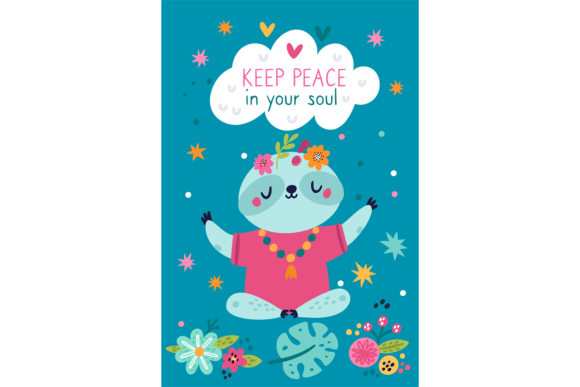
Discover the Charm of Cute Sloth Poster
There's a particular kind of visual asset that stops a scroll, makes someone smile, and sticks in their memory long after they've moved on. The Cute Sloth Poster is exactly that sort of design. At its core, it's a vector illustration of a sloth—a slow, endearing tropical mammal—seated in a classic meditation pose. But calling it just that undersells its personality. This isn't a stiff, clinical yoga graphic. It's a funny animal poster dripping with warmth, humor, and an almost tangible sense of calm. The sloth's expression is blissfully serene, its posture relaxed in a way that feels authentic to the animal's nature. Surrounded by stylized palm leaves and rendered in a clean, modern vector style, the entire composition balances playful charm with a surprisingly versatile aesthetic.
What makes the Cute Sloth Poster resonate so deeply with such a wide audience—from designers and marketers to small business owners and hobbyists—is its dual nature. On one hand, it's a piece of humorous, lighthearted art perfect for casual projects. On the other, its execution is polished enough to anchor professional branding and commercial applications. It speaks the language of "exotic wildlife" and "tropical vibes" without veering into cliché. The meditation asana element taps into the massive wellness and mindfulness market, while the sloth itself carries universal appeal as a symbol of slowing down, embracing rest, and finding joy in stillness. This isn't just another animal graphic; it's a character with a story, and that narrative potential is what gives it real-world value across countless creative endeavors.
Visual Personality and Style Breakdown
The artistic direction of the Cute Sloth Poster leans into a clean, illustrative style that feels both contemporary and timeless. Think bold, confident linework paired with a carefully chosen color palette that evokes tropical serenity—soft greens, warm browns, and accents that pop without overwhelming. The vector format (available as EPS and JPG) means every curve and leaf is mathematically precise, allowing for infinite scalability. Whether you're printing it on a business card or blowing it up for a trade show banner, the detail holds. The palm leaves aren't just background filler; they frame the sloth intentionally, creating natural visual hierarchy and adding depth to the composition.
There's a deliberate playfulness in how the sloth is rendered. Its eyes are half-closed in contentment, its claws gently resting on its knees. This is a "calm being" that radiates approachability. For designers working on brand identity projects, this kind of character illustration can become a mascot—a recognizable face for a yoga studio, a wellness app, a meditation podcast, or even a coffee brand that wants to inject personality into its packaging design. The humor is gentle, never slapstick, which broadens its appeal across demographics. It's the sort of image that makes a twenty-five-year-old content creator and a forty-five-year-old entrepreneur laugh for the same reason: it feels true.
Where This Design Truly Shines
The applications for the Cute Sloth Poster stretch far beyond what you might initially expect. Yes, it works beautifully as a literal poster for a home office, yoga room, or kids' space. But its real power lies in how it functions as a design asset within larger projects.
For social media graphics, this illustration is gold. It's inherently shareable. A wellness influencer could use it as a recurring visual motif in Instagram Stories. A small business owner selling handmade candles might feature it in a "self-care Sunday" campaign. Its relaxing, rest-oriented message aligns perfectly with content strategies built around mindfulness, productivity breaks, or even the simple joy of doing nothing. The vector file ensures crisp rendering across platforms, from high-DPI mobile screens to desktop displays.
In editorial design, the sloth meditation poster adds visual interest to magazine layouts, blog headers, and newsletter banners. Imagine it accompanying an article about burnout recovery or the benefits of slow living. It communicates the theme instantly, without a single word of explanation. Publishers and bloggers who need compelling imagery that doesn't feel stock-photo generic will find this illustration fills a very specific niche.
For packaging design, especially in the wellness, organic food, or artisan product space, the sloth character can serve as a brand mascot or a limited-edition design element. Picture it on a tea box, a granola bag, or a bath bomb label. Its exotic wildlife aesthetic pairs naturally with tropical or nature-themed product lines, while the meditation angle signals intentionality and care—qualities consumers actively seek out.
Even in logo design and broader brand identity work, elements of the illustration—the sloth's posture, the leaf motifs, the overall color scheme—can be extracted, simplified, and adapted. A yoga studio might use a stylized version of the sloth in its logo. A coworking space could incorporate the "slow down" philosophy into its environmental graphics. The versatility of a well-crafted vector like this is precisely why designers invest in premium font and illustration assets: they become building blocks for something larger.
Practical Guidance for Using This Asset
Before integrating the Cute Sloth Poster into your next project, a few practical considerations will help you get the most out of it.
Evaluate project fit first. This illustration carries a specific tone—warm, humorous, relaxed, tropical. It's a natural match for brands and projects that embrace those qualities. If you're designing for a law firm or a fintech startup, it probably isn't the right visual language. But for lifestyle brands, wellness companies, children's products, creative agencies, or any project that wants to feel approachable and human, it's an excellent choice.
Think about font pairings. If you're using the poster as part of a larger layout, the typography you pair with it matters enormously. A clean sans serif font will let the illustration breathe and maintain that modern, uncluttered feel. A handwritten font or script font can amplify the playful, personal quality—think greeting cards, wedding invitations, or boutique branding. Avoid overly formal serif fonts unless you're intentionally going for a high-contrast editorial look. The goal is visual harmony between your typeface and the illustration's personality.
Test at multiple sizes. Because it's a vector, you have the freedom to scale it dramatically. But compositionally, certain details—the sloth's facial expression, the palm leaf textures—read differently at small sizes versus large ones. If you're using it as a favicon or a small social media icon, consider simplifying. If it's a wall poster or a trade show backdrop, lean into the full detail.
Review licensing carefully. For any commercial project—whether you're a freelancer delivering work to a client, a small business printing merchandise, or a publisher including it in a digital product—make sure the usage rights align with your needs. Most vector assets come with clear commercial licensing terms, but it's your responsibility to verify before production. This is especially important for print runs, merchandise, and any application where the image will be reproduced at scale.
Consider color adaptation. One of the advantages of working with vector files is the ability to adjust colors to match an existing brand palette. The default tropical greens and warm browns are lovely, but if your brand identity calls for a different scheme, a few minutes in Adobe Illustrator or Affinity Designer can make the sloth feel like it was custom-drawn for your project. This kind of customization transforms a generic asset into a cohesive part of your visual system.
The Cute Sloth Poster isn't just a cute picture of an animal doing yoga. It's a thoughtfully designed, highly versatile creative resource that bridges humor and professionalism, relaxation and engagement. For designers, marketers, entrepreneurs, and anyone who builds visual content, it represents exactly the kind of asset worth having in your library—one that earns its place across dozens of projects, each time adding something genuine that stock photography simply can't replicate.